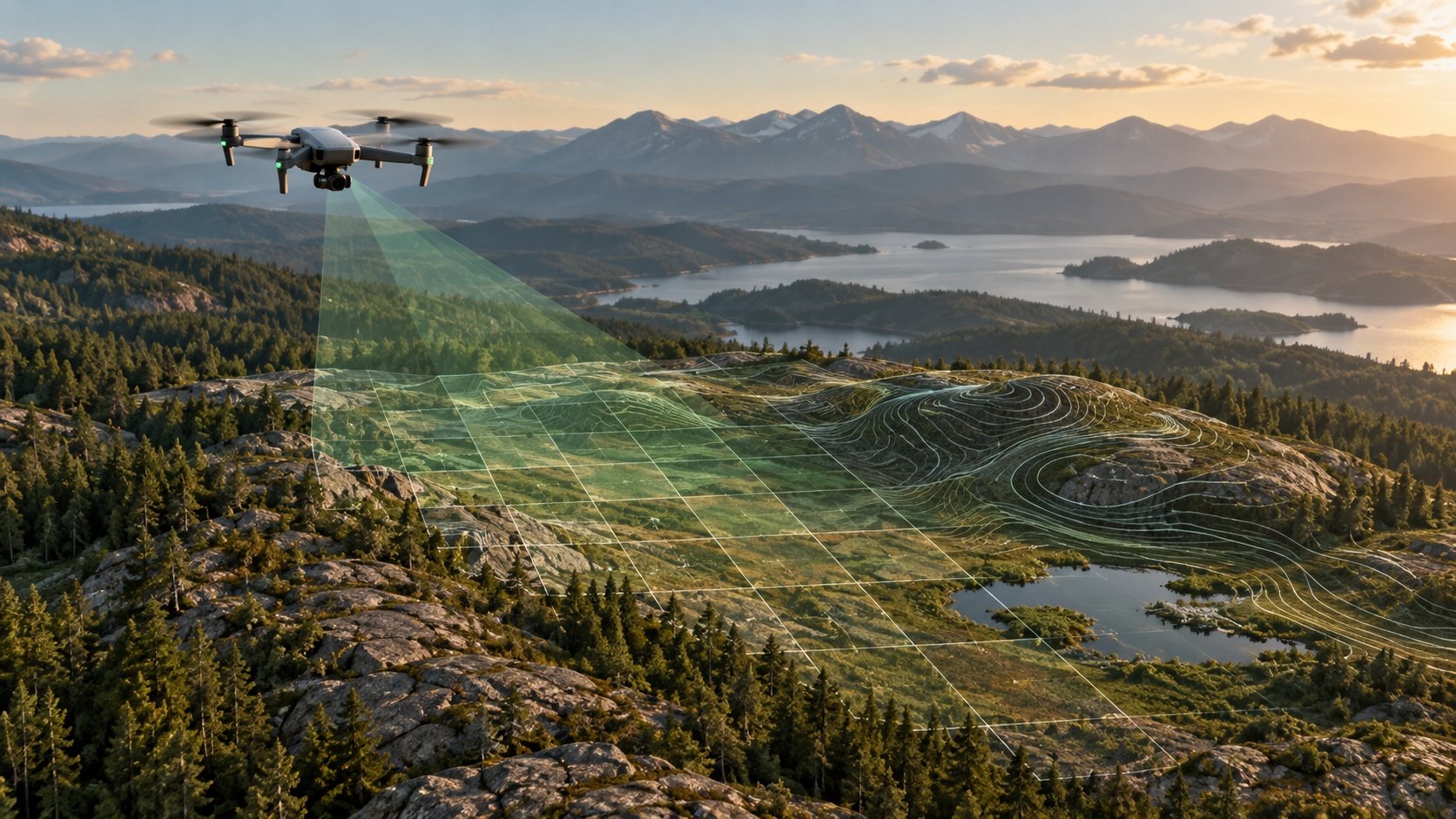
Drone imagery can reveal people, vehicles, property, infrastructure, and precise locations. Keeping processing on the workstation reduces exposure but does not remove operational responsibility.
Know what leaves the computer
License activation and periodic checks exchange entitlement data. Optional support, approved downloads, and Pro sharing use website services. Raw imagery should not be uploaded to a general support ticket.
Secure local data
Use an approved NTFS SSD, Windows account protection, device encryption where appropriate, controlled backups, and clear access ownership. Keep source and project locations out of consumer sync tools unless policy permits them.
Share deliberately
Export only required layers, review screenshots and annotations, remove unnecessary metadata, set link expiry, and verify the recipient. Public links need their own retention and revocation plan.
Finish the lifecycle
Document retention, verified backup, client delivery, cache cleanup, and authorized deletion. Local-first processing works best when every copy has a known purpose and owner.
Build a data map
List original images, EXIF and flight logs, control coordinates, annotations, reports, exports, backups, diagnostics, licence events, optional support attachments, and shared links. For each, record storage location, purpose, owner, recipients, retention, and deletion authority. “Offline processing” describes the compute path; it is not a substitute for this inventory.
Minimize routine transfer
Activation should exchange only the data needed to verify entitlement. Diagnostics should redact usernames, paths, tokens, control coordinates, and project names where possible. Support guidance should explicitly reject raw project archives unless an approved secure transfer and access policy exists.
Secure the workstation lifecycle
Use Windows account protection, device encryption where appropriate, least-privilege access, approved NTFS storage, tested backups, and a documented response for loss or repair. Avoid consumer sync folders unless the organization has assessed their location, retention, and sharing behaviour.
Review exports and sharing
Inspect imagery for people, vehicles, private property, and sensitive infrastructure. Remove unnecessary metadata and internal annotations, set expiry for links, verify recipients, and record revocation. Legal permission to fly does not automatically define permission to publish.
At project close, retain what contract, regulation, and defensibility require; remove regenerable caches; verify backup; and perform authorized deletion with an audit record. Privacy depends on every copy, not only the processing engine.
Example support request
A customer reports that a project will not open. The first response requests sanitized diagnostics and an artifact inventory—not the raw photo folder. Diagnostics remove tokens, usernames, local paths, project names, and precise control coordinates where they are unnecessary. If a file sample is later required, an approved secure channel, purpose, access list, and deletion date are agreed first.
For client sharing, the operator exports only the requested layers, reviews screenshots for people and sensitive locations, removes unnecessary metadata, applies expiry, and verifies the recipient. Raw imagery remains local unless the contract and privacy review explicitly require transfer.
Local-first architecture reduces routine exposure, while these operational choices control the exceptional copies that still create risk.
Sign-off record
Before relying on the workflow, record the project and revision, source dataset, selected preset or method, coordinate and height references, units, processing version, warnings, exclusions, independent validation, and the artifact used for the decision. Reopen critical outputs in an independent viewer and keep their checksums with the report.
The reviewer should answer four questions in writing: Is the required area supported by source evidence? Does the chosen product actually answer the operational question? Are accuracy and limitations stated without inferring more than the checks prove? Can another person reproduce the result from the retained inputs and settings?
If any answer is no, hold the delivery or label the limitation. A documented stop is safer than a polished output whose assumptions cannot be recovered.