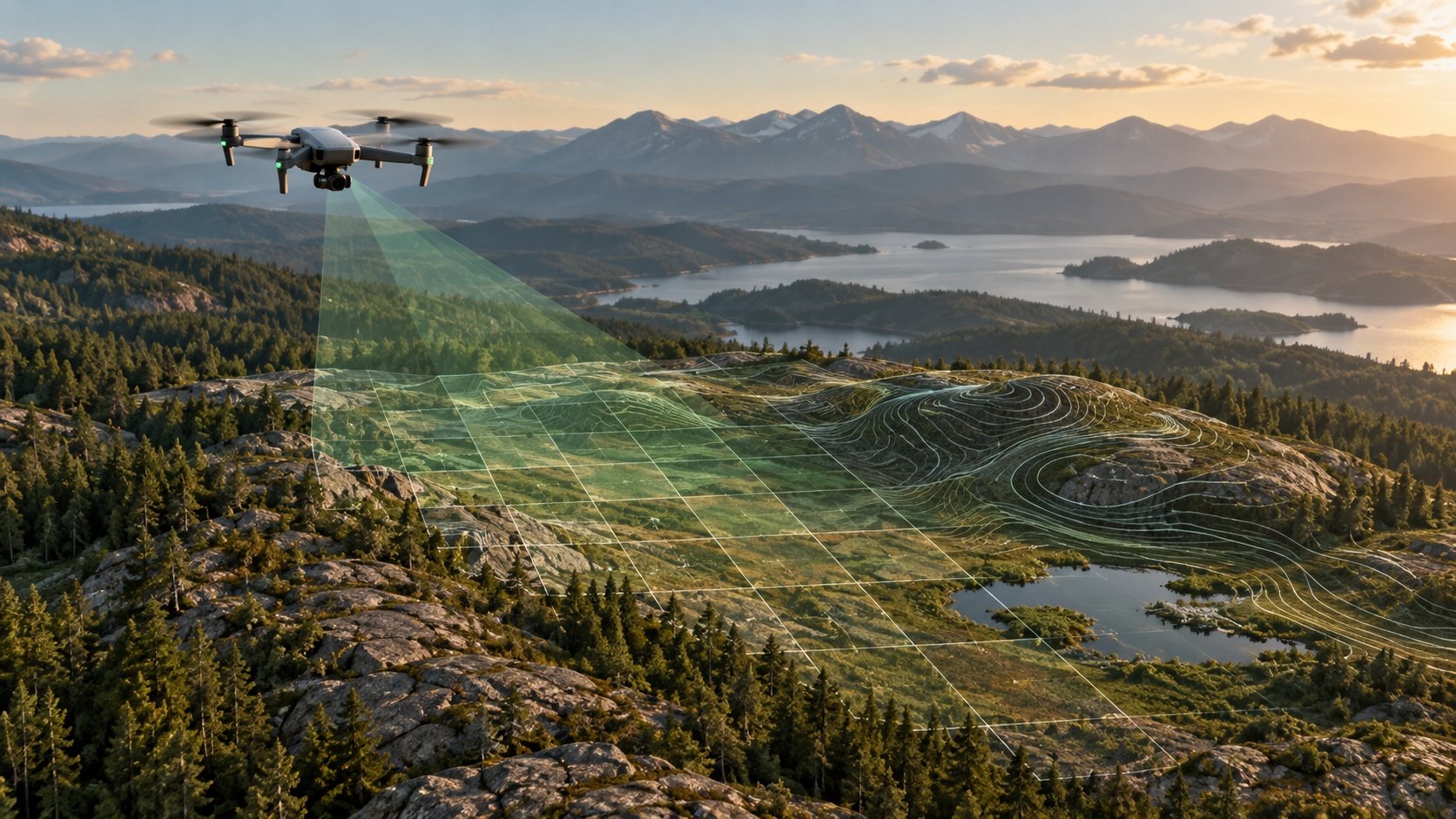
Legacy MapFocal portable archives use a different manifest from current project backups. Renaming or copying folders does not convert that contract.
Validate before extraction
The importer checks the declared path, role, byte size, and SHA-256 hash of every member. Extra files, missing members, unsafe paths, links, and checksum mismatches stop the import.
Build a new project identity
Source images become managed current inputs. Recognized DSM, DTM, orthophoto, point-cloud, contour, mesh, and report files enter the artifact registry. Other existing deliverables remain identified as legacy attachments. Raw generated results retain task and engine provenance.
Reconcile after import
Compare the expected 285 source images, 15 existing outputs, and 1,947 generated outputs. Open 2D and 3D views, create a current backup, restore a copy, and compare checksums.
Original folders, result ZIPs, and partial files remain untouched until that acceptance work is complete.
Treat migration as a forensic copy operation
Start by reading the legacy manifest without extracting into the destination project. Reject unsafe member paths, duplicate normalized paths, missing files, size mismatches, and checksum failures. Record the original archive checksum and format version. Never rewrite the source archive in place.
Map old records into current concepts
Create a new project and revision, copy the 285 source images into managed storage, and retain filenames and timestamps. Register recognized rasters, vectors, reports, point clouds, and viewer files under current artifact kinds. Unknown but valid outputs remain legacy attachments instead of being discarded. Preserve ODX version, processing options, provenance, original manifest, and source relationships.
When equivalent point-cloud formats exist, choose one verified compressed canonical representation and retain the alternative as a legacy attachment unless a documented cleanup is separately approved.
Reconcile counts and bytes
Compare manifest counts with copied inputs, existing outputs, generated outputs, and catalogue records. Hash canonical artifacts after copy. Open representative orthophoto, terrain, contours, point cloud, report, and both 2D/3D viewers.
Create a current backup, restore it under a new project ID, and repeat count and checksum checks. Only then is the importer accepted. Original node data, ZIPs, and partial downloads stay unchanged; source cleanup is a separate decision.
Example reconciliation table
The legacy manifest expects 285 source images, 15 existing outputs, and 1,947 generated outputs. The importer should finish with those exact source and output counts represented in the new project catalogue, plus any explicitly generated current viewer derivatives. Count differences are investigated by path and checksum rather than dismissed as “extra files.”
Recognized orthophotos, terrain, vectors, reports, and point clouds receive current artifact kinds. Unknown valid members retain original names and timestamps as legacy attachments. The legacy manifest and processing options remain available as provenance.
After backup and restore, compare the canonical compressed point-cloud checksum and viewer bundle roots, not only archive size. This proves that conversion, backup, and restore preserve the same evidence while leaving the source archive untouched.
Sign-off record
Before relying on the workflow, record the project and revision, source dataset, selected preset or method, coordinate and height references, units, processing version, warnings, exclusions, independent validation, and the artifact used for the decision. Reopen critical outputs in an independent viewer and keep their checksums with the report.
The reviewer should answer four questions in writing: Is the required area supported by source evidence? Does the chosen product actually answer the operational question? Are accuracy and limitations stated without inferring more than the checks prove? Can another person reproduce the result from the retained inputs and settings?
If any answer is no, hold the delivery or label the limitation. A documented stop is safer than a polished output whose assumptions cannot be recovered.