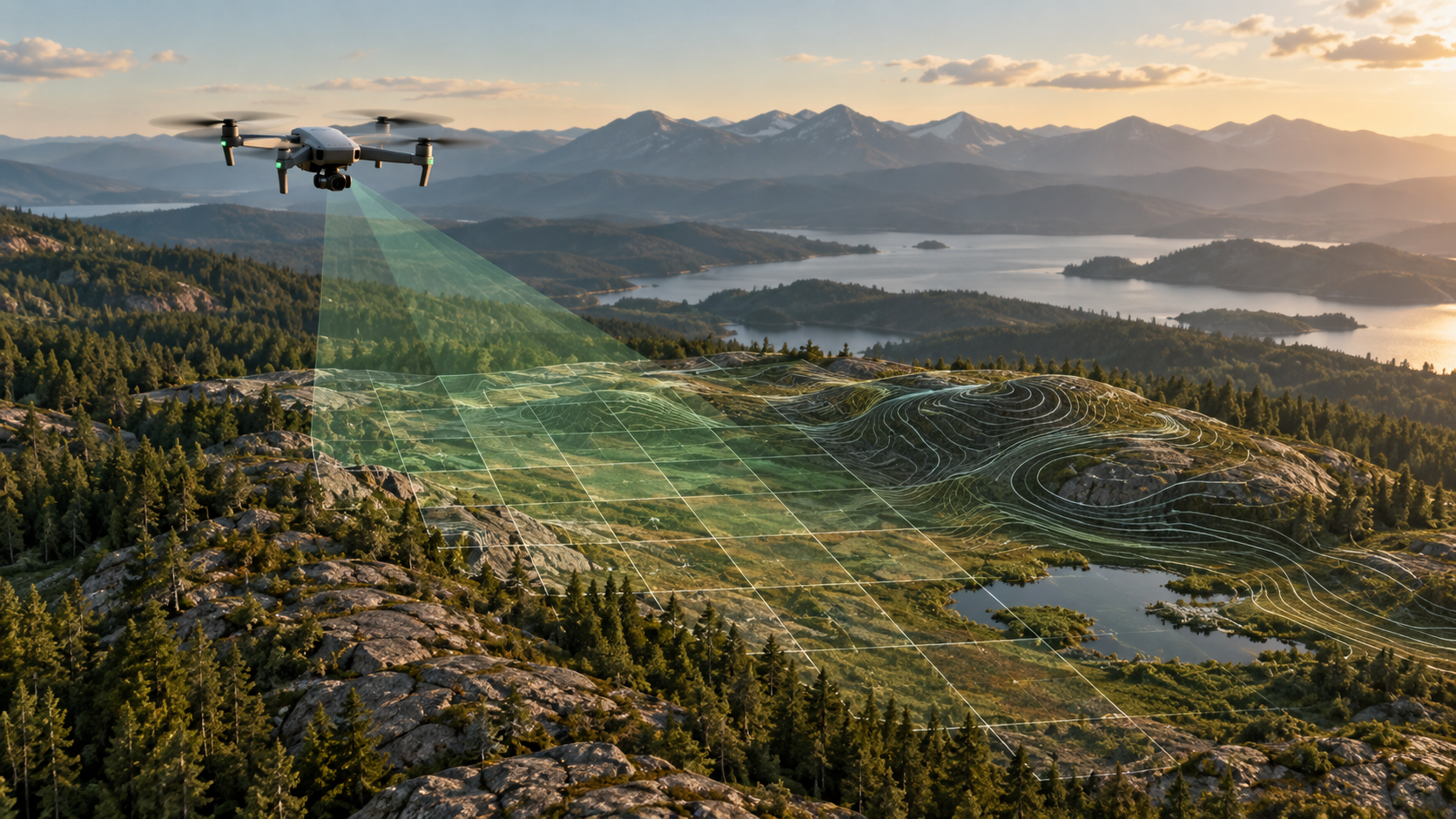
More photographs do not always mean a stronger reconstruction. Low-quality or redundant inputs can consume time and weaken matching.
Blur and exposure
Inspect full-resolution detail rather than thumbnails. Motion blur, missed focus, crushed shadows, blown highlights, haze, and glare can remove the features matching depends on.
Duplicates and redundancy
Exact duplicates add no evidence. Near-duplicates from hovering or excessive capture frequency can expand matching work without improving geometry. Retain them until overlap and flight continuity are understood.
GPS and sequence checks
Plot image positions, inspect time order, and look for isolated photographs, jumps, missing strips, and mixed flights. Missing GPS does not always prevent reconstruction, but it changes matching and georeferencing expectations.
MapFocal flags findings; it does not silently delete images. Document exclusions and preserve the untouched source set so the decision remains reversible.
Build a repeatable intake review
Copy the originals into managed project storage and reconcile filenames and byte counts before analysis. Plot GPS positions and timestamp order, group multiple flights, and flag gaps or isolated cameras. Read camera model, dimensions, focal metadata, and orientation where present. Mixed cameras or resized images are not automatically invalid, but they need deliberate handling.
Interpret automatic warnings
A blur score is a triage signal, not a deletion command. Textureless water can score differently from detailed buildings, and intentional oblique images may look unusual. Review flagged files at full size and compare neighbouring frames. Exact duplicates are safe to identify by checksum; near-duplicates require more care because small viewpoint changes may still contribute geometry.
Assess overlap and redundancy
Use positions and capture sequence to identify missing flight lines, turns with sparse coverage, hovering bursts, and excessive capture frequency. Redundant imagery can increase matching time and memory, but thinning may remove the only useful view of a feature. Keep image thinning experimental, show the proposed exclusions, and preserve the untouched source set.
Record the intake decision
For each excluded image, save the reason, reviewer, and time. Re-run the map and overlap summary after exclusions. The final health report should state total images, images used, missing GPS count, warning categories, flights detected, and unresolved risks. That record makes a later rerun explainable instead of depending on memory.
Example image decision
An automatic check flags five frames as blurry and twelve as near-duplicates. Full-resolution review shows that three blurred frames are redundant cruise images, while two contain the only view beneath a structure. The operator excludes the redundant three, keeps the two with a warning, and leaves near-duplicates in place until their seam coverage is understood.
The camera map then reveals a timestamp gap at the edge of one flight. Because that area is required, the dataset is held for recapture rather than sent into an overnight job. Nothing is deleted from the managed source set; exclusions are project decisions with reasons.
This is the purpose of health checks: focus scarce review time, expose operational risk early, and preserve reversibility. A score alone should never silently decide the source of a survey deliverable.
Sign-off record
Before relying on the workflow, record the project and revision, source dataset, selected preset or method, coordinate and height references, units, processing version, warnings, exclusions, independent validation, and the artifact used for the decision. Reopen critical outputs in an independent viewer and keep their checksums with the report.
The reviewer should answer four questions in writing: Is the required area supported by source evidence? Does the chosen product actually answer the operational question? Are accuracy and limitations stated without inferring more than the checks prove? Can another person reproduce the result from the retained inputs and settings?
If any answer is no, hold the delivery or label the limitation. A documented stop is safer than a polished output whose assumptions cannot be recovered.